
Choosing the right customer relationship management solution is a critical decision for any business. Many Australian companies comparing Odoo CRM vs Salesforce are really looking at how a standalone CRM like Salesforce CRM compares with the CRM features built into Odoo ERP. Both platforms are powerful, but they are designed for very different types of businesses.
This guide provides a practical, feature-by-feature comparison for businesses across Australia.
Why the Difference Matters: CRM vs ERP
- Salesforce CRM focuses on customer relationship, sales pipelines, marketing and service. It is a powerful, purpose‑built tool for selling, managing leads and improving customer experience.
- Odoo ERP covers more: CRM, sales, accounting, inventory, manufacturing, e‑commerce, project management, and more – all under a single system.
That means, with Odoo, you’re not just managing leads, you’re managing your entire business. For many companies, that holistic control can deliver better visibility, fewer disconnected systems and lower total cost.
Key Comparison: Odoo vs Salesforce
Unified Business System vs Stand‑alone CRM
Odoo ERP
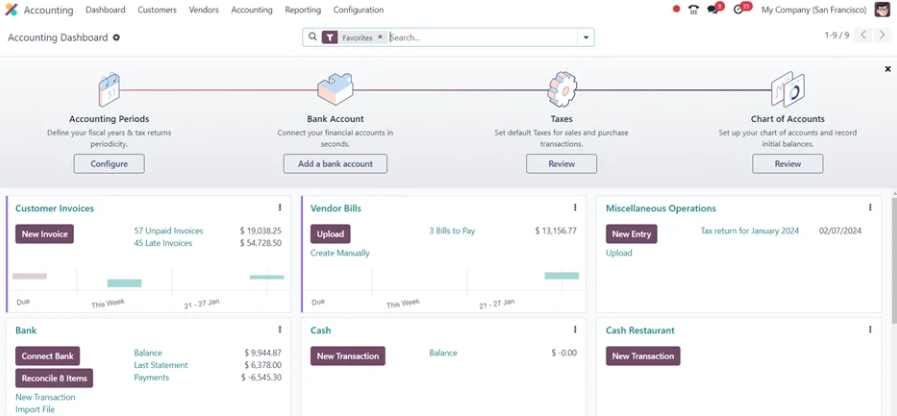
- Includes CRM and sales tools alongside accounting, stock management, e‑commerce, projects and more. Everything runs on the same platform and uses the same database.
- Because it’s modular and comprehensive, you avoid multiple subscriptions or software silos – a big plus for businesses that want all operations under one roof.
Salesforce CRM
-
- Focused on customer relationships, sales automation, pipeline management, marketing and analytics. Excellent if you only want CRM functionality.
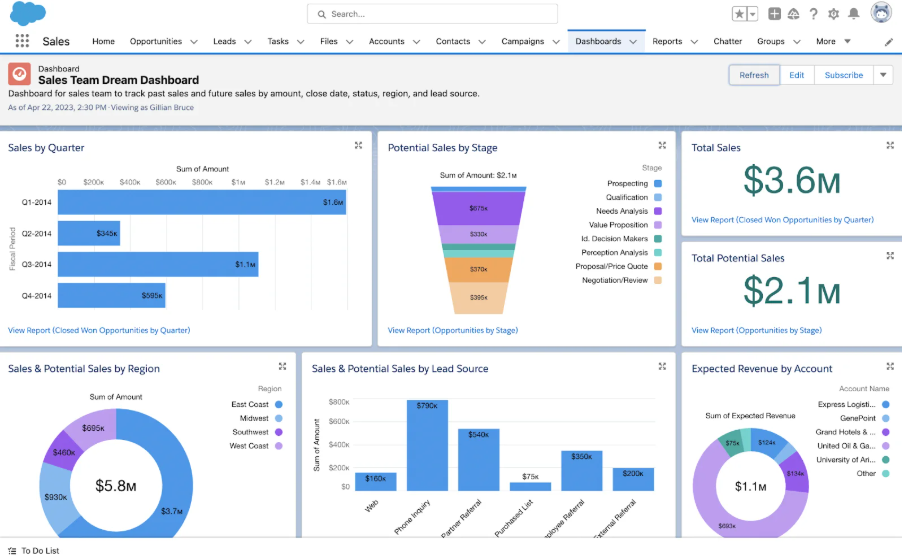
- For non‑CRM elements like accounting or inventory, you’ll typically need separate systems or expensive integrations. That can add complexity and cost over time.
Flexibility, Customisation and Extensions
Odoo ERP
- Because Odoo is built on an open‑source foundation, it offers strong flexibility. Workflows, modules and business logic can be customised to match your operations exactly.
- You pay only for the modules you need – good for keeping costs under control while still scaling up when required.
Salesforce CRM
- Offers deep customisation and powerful tools. Its ecosystem of add-ons and integrations through the marketplace makes it easy to extend CRM functionality significantly.
- But adding features, integrations or third‑party tools often comes at higher cost. Over time, that can make Salesforce expensive, especially if you require more than basic CRM use.
Also read [Odoo for Wholesale Distribution: Inventory, Orders and Automation for F&B Wholesalers in Australia]
Sales Process Automation & CRM Capabilities
Both platforms offer strong CRM and sales‑automation tools. Here’s how they compare:
Basic CRM Features: contact and customer databases, lead and opportunity tracking, pipeline (Kanban), quoting, tasks and follow‑ups — both Odoo ERP’s inbuilt tools and Salesforce CRM deliver these capabilities.
Automation & Workflows: Odoo handles reminders, quotations, sales orders, invoicing and more – as part of its all‑in‑one ERP flow. That integration can help businesses move from lead to fulfilment seamlessly.
Advanced CRM / Enterprise Level: Salesforce adds enterprise-grade customisation, robust reporting, and a wide network of third‑party integrations – great for large sales operations or complex CRM needs.
Cost, Value and Licensing
Odoo ERP
- Because it’s modular and open‑source, Odoo offers a cost‑effective CRM and ERP solution. You pay only for what you use.
- The value multiplies when you use multiple modules – CRM, accounting, inventory, under a single licence and database.
Salesforce CRM
- Pricing for Salesforce tends to be higher, especially when you factor in additional features or third‑party integrations.
- For businesses that only need CRM, Salesforce can make sense. But if your operations involve finance, inventory or operations, costs can quickly add up.
Best Fit: Who Should Choose What
Choose Salesforce CRM if:
- Your primary need is customer relationship management, sales automation, marketing or support
- You expect to scale CRM usage significantly, rely heavily on integrations or have complex sales workflows
- You prefer a dedicated, widely used CRM ecosystem with a high degree of customisation
Choose Odoo ERP if:
- You want a unified platform that covers CRM, accounting, inventory, operations, and more
- You value cost‑effective, modular pricing rather than multiple systems or subscriptions
- You prefer flexibility and the ability to tailor workflows to match your business — not adapt your processes to the software
What businesses should watch out for
- Because Odoo is modular and highly customisable, the initial setup and configuration can take planning and technical experience. Working with a trusted Odoo ERP partner can make the rollout smoother and help you avoid unnecessary rework.
- If you only want simple CRM functionality and do not need accounting, inventory or operations inside one system, Salesforce may feel more straightforward.
- For organisations with complex CRM needs, heavy integration requirements or large sales teams, Salesforce still remains a strong enterprise option.
If you are unsure which platform suits your operations, talk to us. Nexevolve can help you compare both systems based on your current processes, budget and long-term goals.